
The government on Tuesday announced Rs 900-crore allocation in the Budget for the newly set up Ministry of Cooperation for the 2022-23 fiscal, besides slashing Alternate Minimum Tax (AMT) on cooperative societies to 15 per cent and surcharge to 7 per cent, which nodal minister Amit Shah hailed saying it will boost the sector. Of the total allocation for the next fiscal, a significant amount of Rs 350 crore has been provided for digitisation of Primary Agriculture Cooperative Societies (PACs), while Rs 274 crore for an umbrella scheme 'Prosperity through Cooperatives' which would have a number of sub-components with the aim of all-round development of cooperatives in the country. For the first time, a separate budget of Rs 11 crore has been provided to Vaikunth Mehta National Institute of Cooperative Management (VAMNICON).

Government's claim of a "considerable" drop in farmers' suicides in the country did not impress the Supreme Court which on Friday said there should be no such cases at all.

The total worth of Assam Chief Minister Sarbananda Sonowal's assets, both movable and immovable, have increased by over 71 per cent since the last assembly polls in 2016, despite not having bought any new immovable assets.

'To simply let the rupee depreciate to any level according to market forces will not be in the country's interests.'

The moves on basic income for farmers - Rs 6,000 per person in three installments per annum - and subsidised agricultural loans are likely to boost the rural economy through consumption in the near-term, but will have a fiscal cost, it noted.

Her statement came ahead of a crucial round of talks scheduled to be held between the Centre and representatives of the agitating farmers during the day.

A three-judge bench headed by Chief Justice of India Sharad Arvind Bobde will hear the application on January 18 along with pleas raising the issue of farmers protesting at Delhi borders.

Tikait also said if the government continues to dismantle the resources, one day India will be known as 'Mazdoor colony' and only labour class (will be left) in the country.
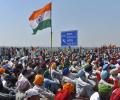
Farmer leaders on Saturday said the protesting unions stand firm on their demand of a complete repeal of the three agri laws and asserted that they are ready for talks with the government, but that should be held without any condition.

Union minister Ramdas Athawale on Wednesday said the Congress had back-stabbed Sharad Pawar and not the other way round, two days after Shiv Sena leader Anant Geete accused the veteran politician of backstabbing Congress and forming the NCP in 1999.
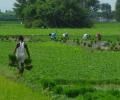
About 150 years ago, in British India, big farmers in the western region of Maharashtra agitated over unfair lending practices and demanded a more fair and inclusive financing structure. People say this is where the seeds of the cooperative movement, now omnipresent in the country, were sown. Today, more than 800,000 cooperative societies thrive in India, with 300 million members, a number close to the population of the United States. Despite a reach this deep--grass roots as they call it--cooperatives do not occupy a lion's share in the Indian economy.

In January last year, the US signed the first phase of the trade deal with China, which former President Donald Trump described as historic, concluding more than a year of tough negotiations including several months of suspension of talks between the two largest economies of the world.

The repo rate has been left unchanged at 4 per cent, Governor Shaktikanta Das said while announcing the decisions taken by the central bank's MPC.
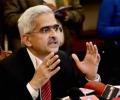
Stating that recent agriculture reforms have opened new opportunities, the RBI Governor said the farm sector is emerging as a bright spot.

'Rather than cutting and pasting from advanced economies, we should use basic economic principles to think about what is right for India at the stage of development at which we are,' says Chief Economic Advisor Krishnamurthy Subramanian.

Newly-elected Conservative Party leader and prime minister in waiting Liz Truss is among the senior British politicians known for championing deeper India-UK strategic and economic ties, describing them as a "sweet spot" of global trade dynamics.
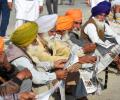
In their letter, the lawmakers said that the US as a nation that is familiar with political protests can offer counsel to India during their current period of social disturbance.

'For the next two years, we expect the bulk of earnings growth contribution from sectors like financials and energy, where the outlook remains positive, while the sectors which are linked to domestic consumption and are currently witnessing strains on margins have low salience for Nifty earnings.'
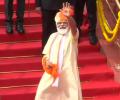
Prime Minister Narendra Modi delivered the customary Independence Day address to the nation after unfurling the Tricolour at the Red Fort. India is marking its 74th Independence Day under the shadow of the Covid-19 pandemic.

After his statement, opposition leaders will speak and if required Singh may give a clarification, the sources said.

After the Gujarat and Himachal elections and the municipal polls in Mumbai and Delhi, Karnataka, Rajasthan, MP and Chhattisgarh will elect new assemblies next year leading up to the Lok Sabha election in April-May 2024, points out Virendra Kapoor.

'An earthquake of a slightly higher magnitude in the Western Himalayan region is going to be catastrophic -- not just because of the fragility of the region but because of how densely we have occupied it.'

'While we note the very strong cyclical recovery in the economy, we believe there is still uncertainty over medium-term prospects.'
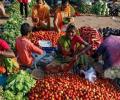
India's wholesale price-based inflation is at a 30-year high, leading to a "very alarming" situation for the country, former World Bank chief economist Kaushik Basu said on Thursday. He, however, doesn't see any risk of hyperinflation, but cautioned that if retail inflation follows wholesale prices, it might lead to "inflationary crisis". Participating in a virtual event organised by the Asia Society, India, Basu said the inflationary situation in India is at a "very risky bend".
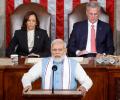
Here's the full text of Prime Minister Narendra Modi's address to a joint session of the United States Congress, delivered on Thursday.

Water shortage is likely to lead to political tensions and instability in the future, warns Simon George, President, Cargill India.
'We have promised to ensure reduced tax rates.'

Modi had clearly not come to terms with the limits to a prime minister's powers, any prime minister's powers however strong numbers he may have in Parliament, observes Virendra Kapoor.

India's GDP is within the striking distance of attaining positive growth, the Reserve Bank said observing that the letter "V" in the V-shaped recovery stands for vaccine. The Indian government launched the world's biggest vaccination drive on January 16 to protect people from COVID-19. "What will 2021 look like? The shape of the recovery will be V-shaped after all and the 'V' stands for vaccine," said an article on the 'state of economy' in the RBI's January Bulletin. India has launched the biggest vaccination drive in the world, backed by its comparative advantage of having the largest vaccine manufacturing capacity in the world and a rich experience of mass inoculation drives against polio and measles.

A homemaker in every family would get a monthly assistance of Rs 1,000, the manifesto said.
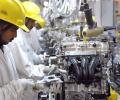
Almost all recent labour strikes were declared illegal by the labour department of Gujarat.

Loan waivers will never be enough. Reforming the agricultural marketing system is essential to addressing the concerns of farmers in a sustainable manner, says Nitin Desai.

Stressing that economic growth will only move upwards, the Reserve Bank of India Governor Shaktikanta Das on Friday pegged the GDP growth rate for the next financial year at 10.5 per cent, though a tad lower than the government's projection of 11 per cent. The projection is in line with the estimates in the Union Budget 2021-22 presented in Parliament earlier this week. The Economic Survey, tabled by the government in Parliament recently, has projected that the economy will grow at 11 per cent, up from an estimated historic decline of 7.7 per cent in 2020-21, on account of the COVID-19 pandemic.

The Bhartiya Kisan Union Lokshakti said the principle of natural justice is going to be violated as those appointed to the four-member committee 'have already supported these laws'.

'We need to encourage the next generation of farmers to continue in farming'

The farmer leaders said they are not willing to participate in any proceedings before a committee appointed by the Supreme Court, but a formal decision on this will be taken by the Morcha.

'This debate is going on all over the world and everybody is saying that only GDP cannot estimate the real (economic) situation of a country.'
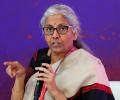
'The prospects for both India and the global economy is that we are headed towards a very difficult time.' 'I see very uncertain at least 8-10 months for both India and the rest of the world.'

'The rise in unemployment, underemployment, discouraged workers and job insecurity is likely to continue, with very adverse consequences for the nation's economic well-being and social cohesion,' warns Shankar Acharya.

The tragedy is not the inevitable drought or the inevitable flood. It is our inevitable lack of ability to push and get done what needs to be done, says Sunita Narain.
